
November 5, 2026
Are you wondering whether your business can afford another employee, a new vehicle, or a second location? Maybe sales are growing, but you are unsure how much profit or available cash you will have next year.
A business budget helps you evaluate those decisions before committing your money.
What is a Business Budget?
A business budget is a financial plan for a specific future period. It establishes planned revenue, expenses, and financial targets. A comprehensive budget also includes plans for major purchases, financing, and cash needs.
Budgets connect your business goals with the resources needed to accomplish them. They can also help communicate expectations and hold people accountable for carrying out the plan.
The goal is not to predict the future perfectly. It is to make your assumptions clear enough to evaluate decisions (and make good ones) and recognize when circumstances change.
Why is Budgeting Important?
A budget helps you consider a decision's financial consequences before you make it. It can help you evaluate whether to hire, purchase equipment, increase spending, or arrange financing and identify potential cash shortages early enough to consider your options.
For example, instead of asking only, “Do we have enough money in the bank to buy this vehicle?” you can ask, “How would this purchase affect our ability to cover payroll, operating expenses, and other commitments over the coming months?”
Budgeting has many benefits for the business and the employees working in it, including:
Creating a plan of action that can be a road map for the executives, managers, and staff to follow
Communicating to executives and managers what goals and targets are expected of them
Improving decision-making by linking decisions to financial impacts on profitability, cash flow, financing, dividends, etc.
Helping executives and managers decide where to allocate resources to which departments or what projects to prioritize in the company
Planning for profits and helping look at "what-if" scenarios
Allowing executives to monitor, control, and direct activities of managers and staff in the company.
Creating performance standards that can be compared to actual performance
And much more…
What Should a Business Budget Include?
The supporting schedules should match how your business earns revenue and uses resources. Common planning areas include:
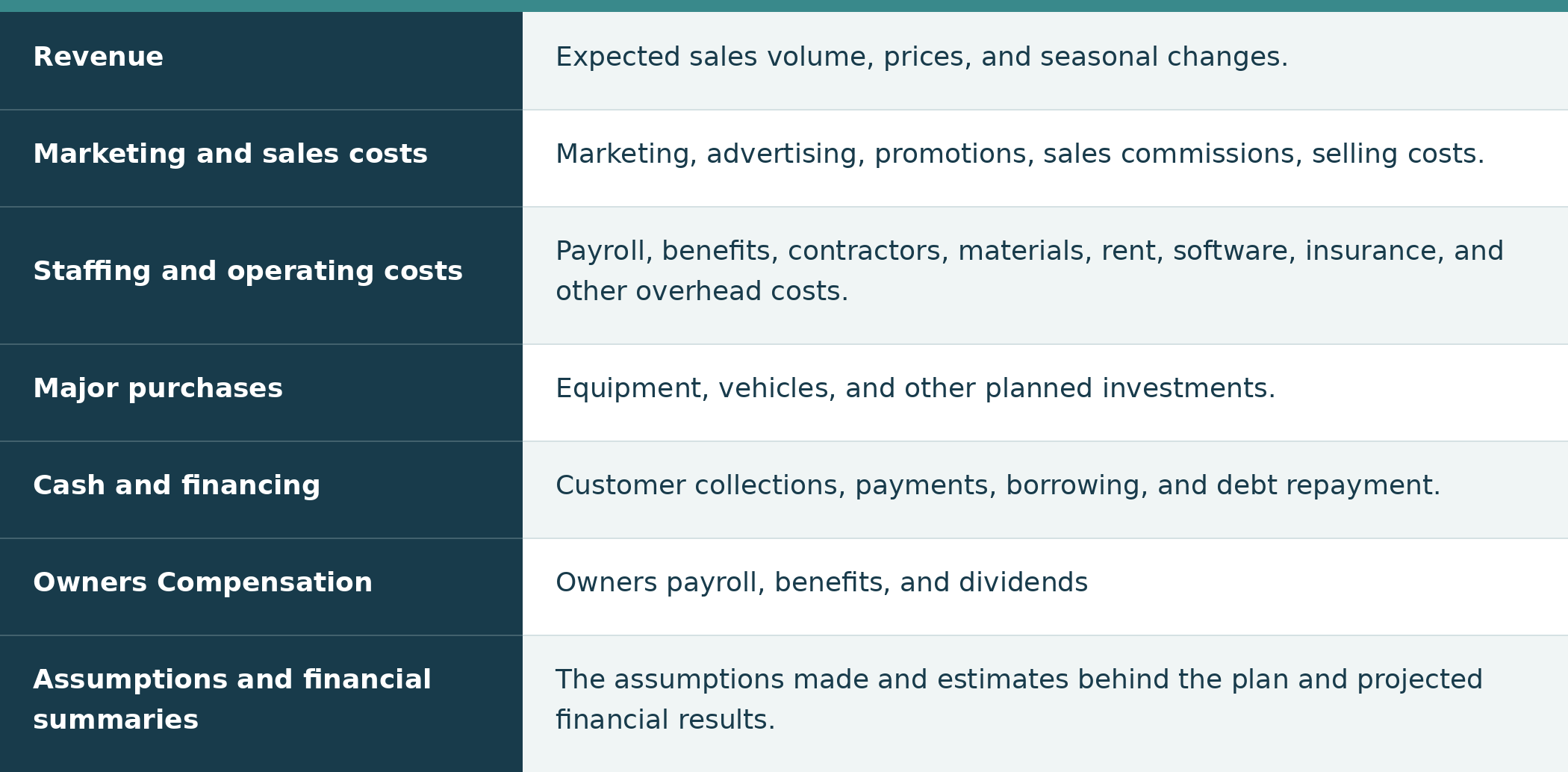
Operating schedules feed into the budgeted income statement, while cash, investment, and financing plans help show the broader financial position. More comprehensive plans also include a budgeted balance sheet.
Not every business needs a manufacturing-style budget. A service business, for example, may focus on billable capacity and labor costs, while a manufacturer needs additional production and inventory schedules.
What Does the Budgeting Process Involve?
Start with your goals and recent financial results. What do you want to accomplish, and what changes would be necessary?
Next, document the assumptions behind the plan, such as expected sales, pricing changes, staffing needs, and major purchases. Translate those assumptions into revenue, expense, and cash estimates. Breaking the plan into months can make it easier to compare with your regular financial reports.
Include people who understand the work being planned. For example, a department manager may know about upcoming staffing or equipment needs that are not obvious from the accounting records.
Before approving the budget, test important assumptions: What would change if sales were lower, costs increased, or customer payments arrived later than expected? Scenario planning can help expose where the plan is most sensitive.
Example: Can You Afford Another Employee?
For example, suppose a new employee would cost $7,500 per month, including salary, employer payroll taxes, and benefits. Recruiting and onboarding would add another $3,000.
Starting on July 1 would add $48,000 to that calendar year’s planned costs, assuming six full months of employment and no other added costs:
$7,500 × 6 months + $3,000 = $48,000
You could compare that cost with the additional work the employee would support, or the time they would free up for other activities. Then consider a slower-growth scenario before committing.
Remember: Profit and Cash are Different.
A profitable business can still face a cash shortage. Under accrual accounting, you may record revenue before the customer pays, while payroll and other bills still come due.
A cash flow plan estimates when money will actually enter and leave the business. That makes it an important companion to a profit budget, especially when evaluating hiring, expansion, or major purchases.
How is a Budget Different from a Forecast?
A budget establishes your financial plan and targets. A forecast estimates what is likely to happen based on current results and updated assumptions.
For example, your budget might assume a new location opens in July. If construction is delayed until September, your forecast should reflect the revised opening date and its expected financial effects. The original budget still shows what you initially planned.
How Should You Use Your Budget?
Review actual results against the budget each month. Investigate important differences and decide whether action is needed.
Do not assume every unfavorable difference represents a problem or that every favorable difference represents success. Higher costs may accompany higher sales, while lower spending may reflect delayed maintenance or unfinished work. The reason for the difference matters.
Use those findings to update your forecast and reconsider upcoming decisions.
What Are the Limitations of Budgeting?
Budgets take time to prepare, depend on assumptions, and can become outdated. Unrealistic targets or rigid spending restrictions can also encourage decisions that improve short-term results while harming longer-term priorities.
Financial performance is only part of the picture. Review the budget alongside measures of customer satisfaction, service quality, and employee performance, not instead of them.
A budget's value comes from using it to guide decisions, not simply completing the spreadsheet.
Need Help Preparing a Budget for Your Business?
At Vista Financial CPA, we help small and mid-sized businesses develop practical budgets and financial forecasts. Our goal is not simply to prepare financial reports. We work with business owners to understand their numbers, identify trends, monitor cash flow, and use financial information to make better business decisions.
Contact Vista Financial CPA to discuss a financial plan that supports your business goals.