
How to Make Sure Your Business Has Enough Cash for Taxes
September 8, 2026
Your business had a great year, sales are up, customers paid their invoices, and you finally had room to purchase equipment or pay yourself more. Then your tax preparer tells you how much you owe—and the money is no longer there. How do you avoid that situation? Taxes can be stressful and confusing to calculate how much they will be, and dreadful to hear how much you owe the government on April 15. The last thing you want is a surprise tax amount from your tax preparer during tax time, saying you owe money that you already spent during the year. But saving money for taxes doesn’t have to be painful; it just has to be planned properly, and when it is, it can eliminate a lot of stress before tax time comes around. Remove the guesswork and work with your tax preparer to prepare a tax estimate or projection to plan for this year's taxes.
Calculating income taxes on your own can be complicated because not only are the tax rules complex, but your income may be subject to other taxes (Social Security and Medicare), federal income tax rates are progressive, which means the tax rate increases as your profits increase, and tax rules change depending on your business’ tax filing entity.
1. Start with a tax projection (estimate) for the year
If your business is profitable, set aside the money for taxes first before taking it out for distribution or making any major purchases. There is no single savings percentage that works for every business owner. Your income tax depends on your business’ taxable income, business structure, deductions, credits, and personal circumstances. Your tax estimate also needs to account for taxes already paid through withholding and estimated payments.
Start by keeping your accounting records up to date to monitor your business’ income, expenses, and profits monthly. Then ask your tax preparer to use your year-to-date results and expectations for the rest of the year to estimate your tax obligation.
Do not assume your bank balance tells you how much taxable profit you have. For example, a sole proprietor’s personal withdrawals reduce the business’s cash but are not deductible business expenses. Taking money out does not make the underlying profit disappear.
Ask your tax preparer for both your projected total tax bill and the amounts you should pay throughout the year.
2. Identify what taxes you are paying. And what are the income tax rates?
Income taxes are the typical taxes we pay to the IRS; they are progressive and based on the income reported on tax returns for personal and/or business income. Certain states may also have income taxes that are either progressive or flat. Other taxes such as Social Security and Medicare may affect how much you pay on your tax return or throughout the year. There are other taxes, such as excise, sales, and property taxes, but they won’t be covered in this post. Based on 2026 income tax rates, federal income tax rates can reach 37% on personal income, and in some states like California, they can reach 12.3%. For certain businesses, like C-corporations, tax rates can be a flat 21% for federal and 8.84% for California (different in other states).
3. Clarify what type of tax filing entity your business is?
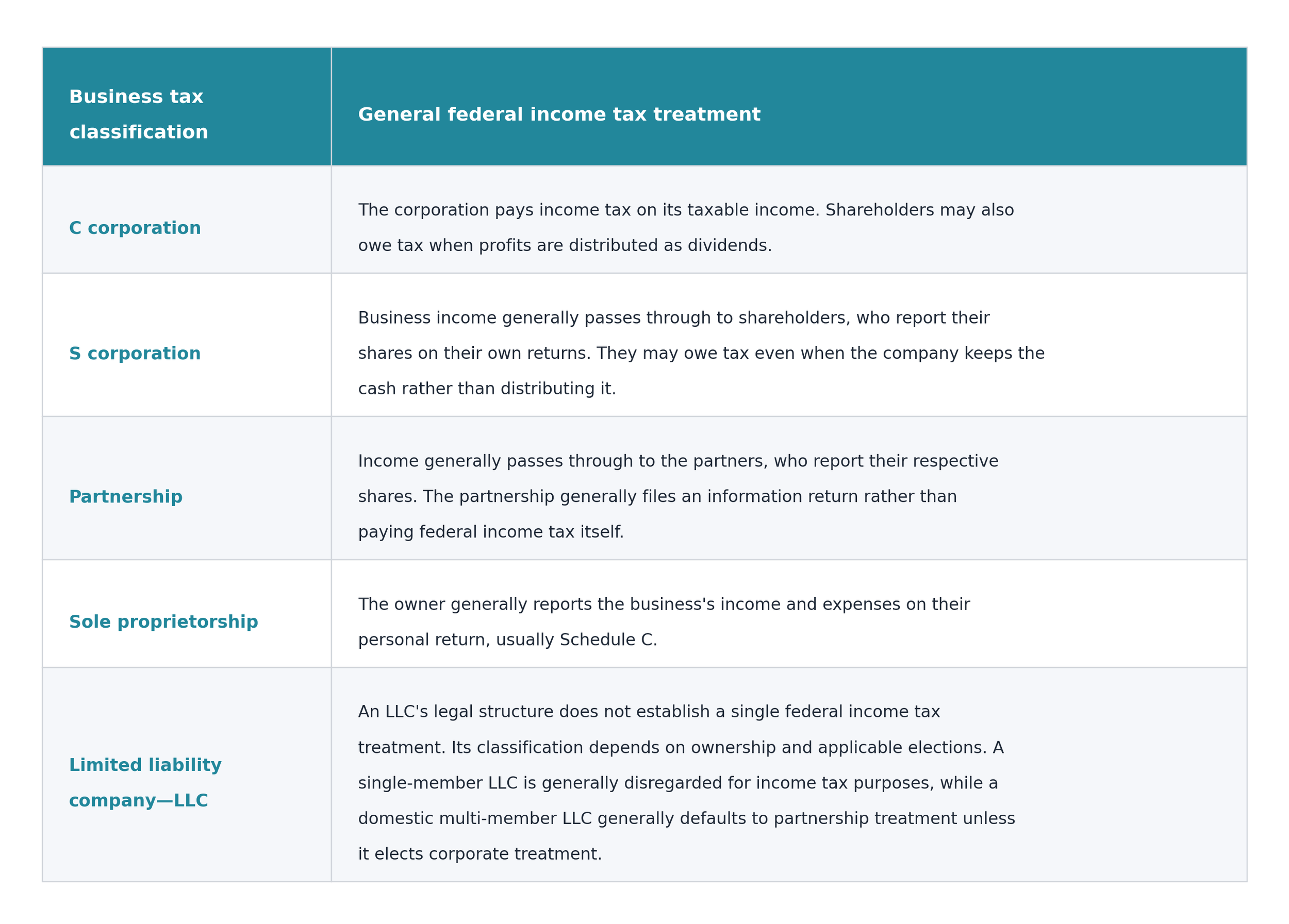
California businesses may also owe taxes at the business level. For example, California generally taxes an S corporation’s California-source net income at 1.5%, subject to an $800 minimum franchise tax and applicable exceptions.
4. Create a separate bank account and schedule regular transfers
Consider keeping your tax reserve in a separate bank account rather than mixing it with everyday operating cash. You can work with your accountant on which bank reserves can be used for day-to-day operations and which can be used for tax reserves.
Next, turn the tax projection into a weekly or monthly transfer target. Base that target on the amount needed before the relevant payment deadline, not simply the number of months left in the year.
For example:
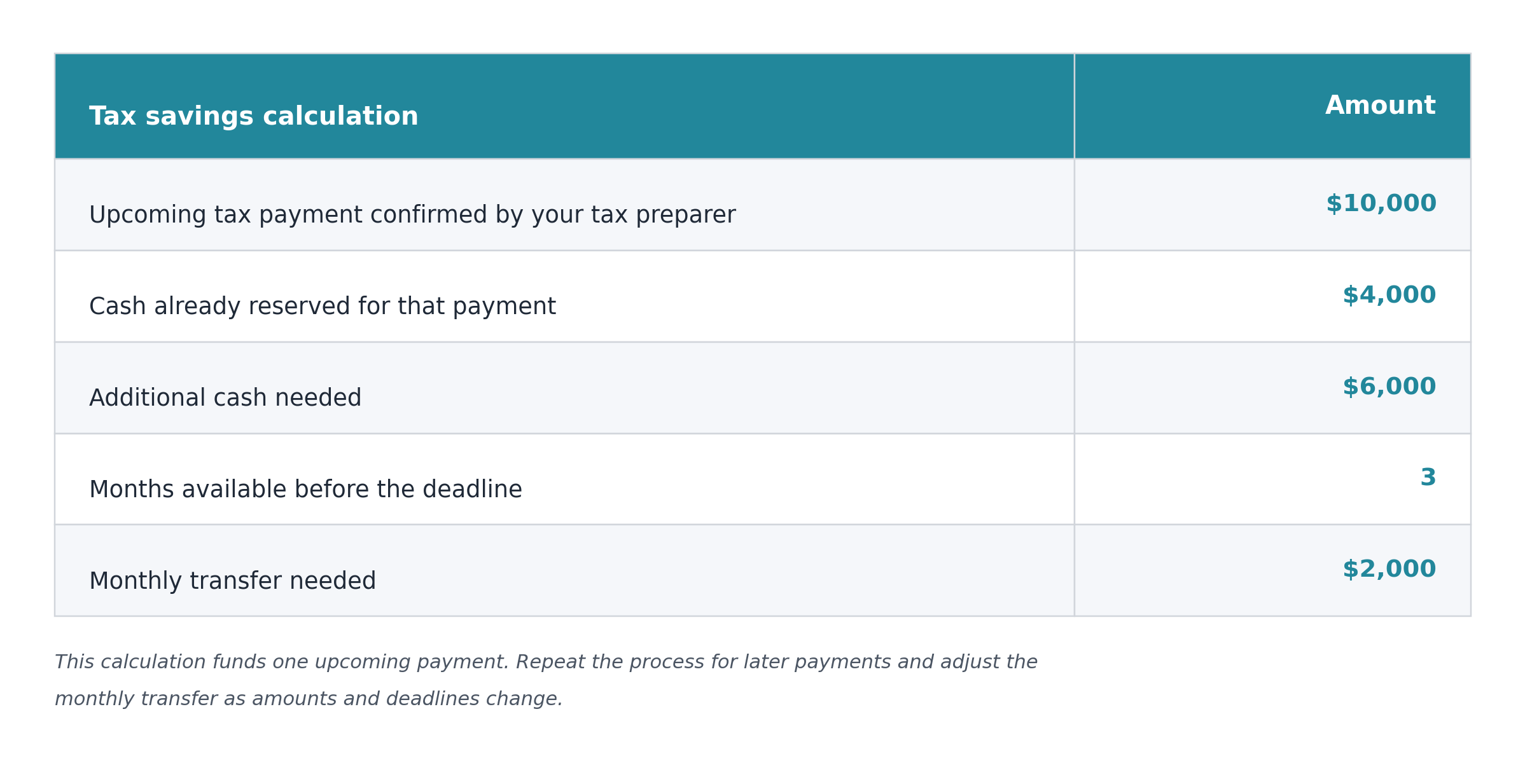
Automate transfers when practical, but review the amount regularly. Moving a fixed amount every month is only useful when that amount still matches your needs.
5. Plan around tax deadlines—not just tax season
Saving money and paying taxes are two different steps. Federal income taxes are generally paid throughout the year through withholding or estimated tax payments. Keeping money in a savings account does not satisfy a payment deadline.
For calendar-year individuals, federal estimated tax payments are generally due April 15, June 15, September 15, and January 15 of the following year, with adjustments for weekends, holidays, or applicable relief. Notice that these dates are not evenly spaced by three months.
6. Use your tax projection to set a savings percentage
There is no single savings percentage that works for every business owner. A percentage can make tax savings easier to manage, but it should be based on your projected tax needs—not selected solely because your business is an S corporation, partnership, or sole proprietorship.
Ask your tax preparer to help establish a reserve percentage or dollar target. Clarify which taxes it covers, whose taxes they are, and how withholding and estimated payments are being accounted for. While waiting for an updated projection, use your most recent confirmed payment schedule as a temporary cash-planning reference and request an update promptly. Do not assume that last year’s payments will cover this year’s full tax bill.
Review the savings target as your results change. The objective is to fund your actual obligations without unnecessarily tying up cash needed to operate the business.
7. Review your reserve before spending or taking distributions
Make tax funding part of your monthly financial review. Compare your updated tax projection, payments already made, reserve balance, and upcoming deadlines. Revisit the tax projection when income or deductions change significantly.
Include tax payments in your cash flow forecast alongside payroll, rent, vendor bills, and loan payments. Before approving an owner’s distribution or major purchase, ask: after this payment, will we still have enough cash for operations and our upcoming tax obligations?
What happens if I pulled the money out of the business already?
If the money was taken out as a dividend, distribution, or draw, unfortunately, taking the money out of the business is not a business tax deduction and does not reduce or eliminate the tax obligation. If the money has already been spent, contact your tax preparer promptly to confirm the amount and deadline. Review further owner distributions and discretionary spending and update your cash flow forecast to determine how much you can rebuild before the payment is due.
In Summary
Preparing for taxes is an ongoing cash management process. Prepare, plan, and estimate what you will owe; set money aside consistently; pay on time; and adjust as the business changes. Work with your tax preparer to stay up to date with the changes.
Disclaimer
Vista Financial CPA provides this content for general informational and educational purposes only. It does not constitute legal, tax, accounting, investment, or other professional advice or services and should not replace advice tailored to your circumstances. Before making decisions or taking action based on this content, consult a qualified professional adviser who understands the relevant facts of your situation. All information is provided “as is,” without warranties of any kind, express or implied, including warranties of performance, merchantability, or fitness for a particular purpose. We do not guarantee the accuracy, completeness, or timeliness of the information. Laws, regulations, and other circumstances may change, and previously published content may not reflect the latest developments. Some content may be created or developed with assistance from artificial intelligence. Regardless of how it is produced, all content is intended for general informational and educational purposes and is subject to this disclaimer. Reading, viewing, listening to, or interacting with our content—including through email or social media—does not, by itself, establish a client or other professional relationship with Vista Financial CPA.
